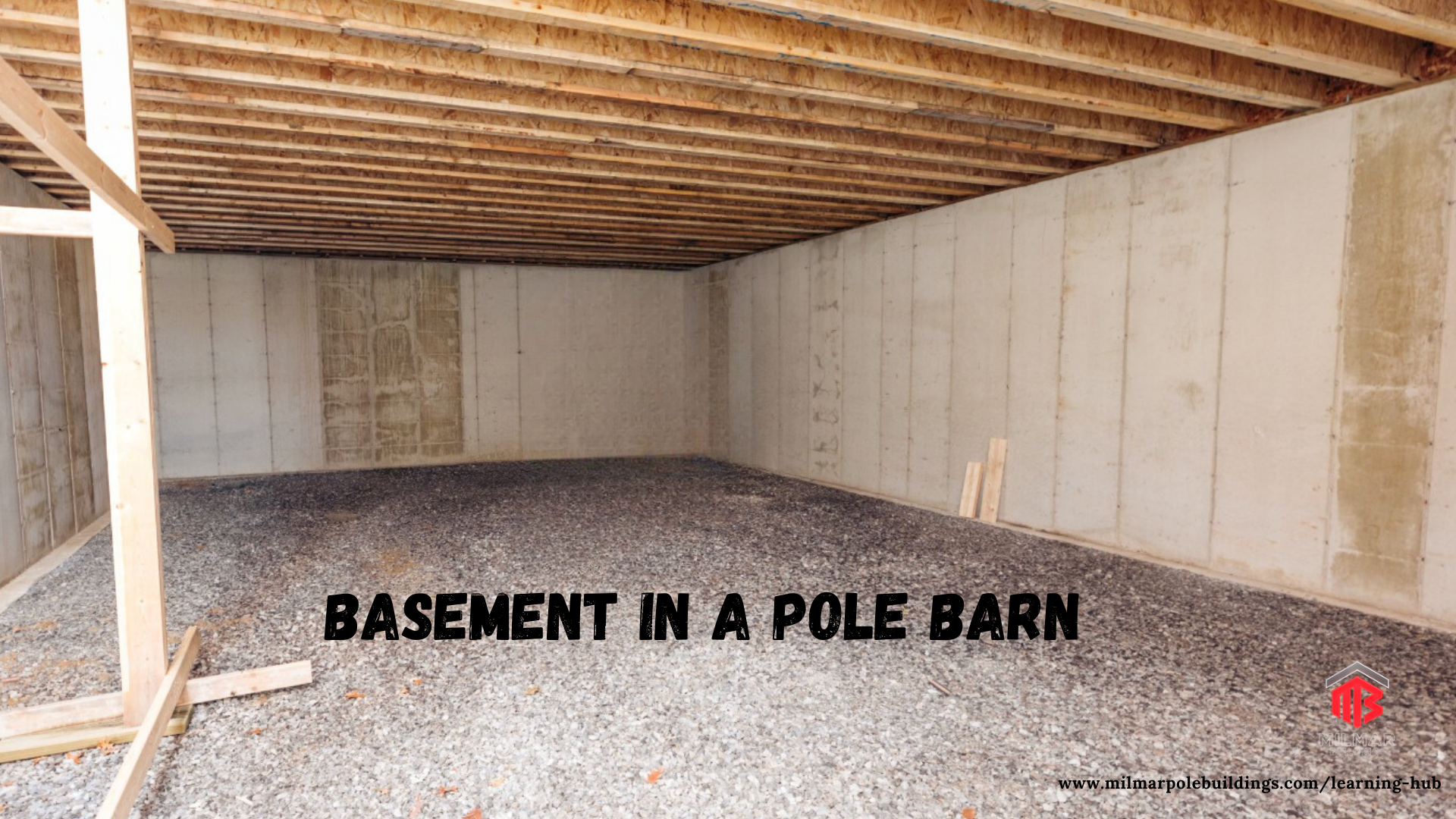
The straightforward answer is yes, you can indeed have a basement beneath your pole barn, or you can have a storm shelter added. However, before you break ground, there are some key aspects to consider. Unlike traditional construction methods, pole barns rely on vertical poles to support the structure, making modifications for a basement different than those of conventional buildings.
Pole barns traditionally rely on posts driven into the ground. To add a basement, you may need to explore alternative foundation options, such as a concrete slab or full basement walls. Talk with your builder to understand what is going to work best for your individual situation. Sometimes a hybrid approach works well too! If you want a basement under only a portion of your build.
Check your local building codes and regulations. Some areas may have restrictions on basement construction or specific requirements you need to meet. Compliance with these codes is going to be essential for a successful project.
Excavation for your basement is usually contracted through the builder you use, unless you have a licensed, trustworthy excavator you know, who is able to work well with your builder. Whoever is doing the excavation should be familiar with and have done basement construction before. You don't want to hire someone who has never done this before, as it can compromise your entire build.
The type of soil on your property plays a role as well. Sandy soils are generally easier to excavate than clay-heavy ones. A soil test can provide insights into the feasibility of digging a basement and what reinforcements and materials will be needed to work best for your particular site.
Basements demand specific construction materials to withstand the underground environment. Waterproofing measures become really important to protect your space from moisture issues.
Adding a basement to your pole barn involves costs beyond the standard construction of the build itself. Excavation, foundation reinforcement, additional labor and materials contribute to the overall expenses. However, the investment may be worthwhile if the extra space aligns with your needs. Cost will depend on size, terrain, and the area where you live. Talk to your builder for a personalized quote.
Seek advice from a structural engineer or contractor experienced in pole barn modifications, like Milmar. We can assess your specific situation and offer guidance.
Basements can be prone to moisture, so ensure proper ventilation to prevent issues like mold and mildew.
Adding a basement is an investment. Plan your budget carefully, factoring in excavation costs, foundation materials, and any necessary modifications to your pole barn structure.
Types of basement options would include 1. Full/standard basement 2. Walk-out basement or 3. Half/partial basement
If you are primarily wanting a basement to have additional square footage in your design, the square footage can be more cost effectively added through a second story. Two-story barndos are going to cost more than a ranch barndominium, but they will certainly still cost less than adding a basement to your design.
If having a basement is more for the security of having a storm shelter, there are storm shelter construction methods we can use for barndominiums that allow you to have an above-ground, concrete storm shelter, at a lower cost than a basement construction would cost. We've built a number of these in barndominiums - think of it like a safe room and a storm shelter.
These storm shelters/safe rooms have become even more popular in barndos in recent years! And they are still more cost effective than adding a basement.
Adding a basement to your pole barn or barndominium design and plans is certainly a possibility. And yes, while it requires careful planning and consideration, many barndo builders can help you include one in your buildings design.
Remember, every property is unique, so what works for one may not work for another. If you’re contemplating this ambitious project, gather insights from local experts and be sure to adhere to regulations. Oh, and hire a good builder that knows what they're doing 😉